
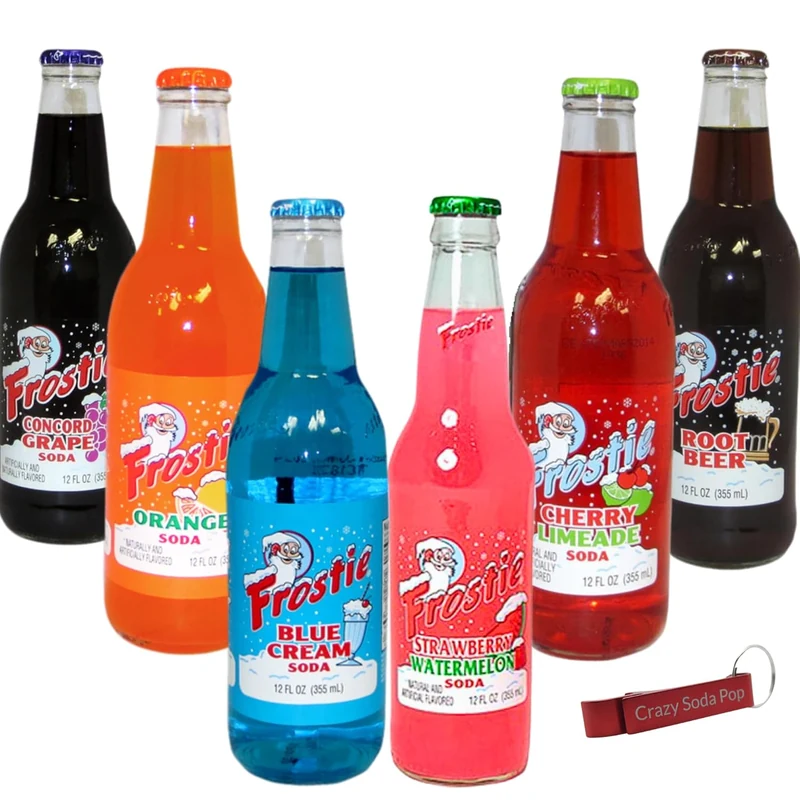
Frostie Root Beer began in 1939 when George Rackensperger founded The Frostie Beverage Company in Catonsville, Maryland. Post-war America wanted affordable treats at car hops — creamy root beer with a tall foam head became Frostie's calling card.
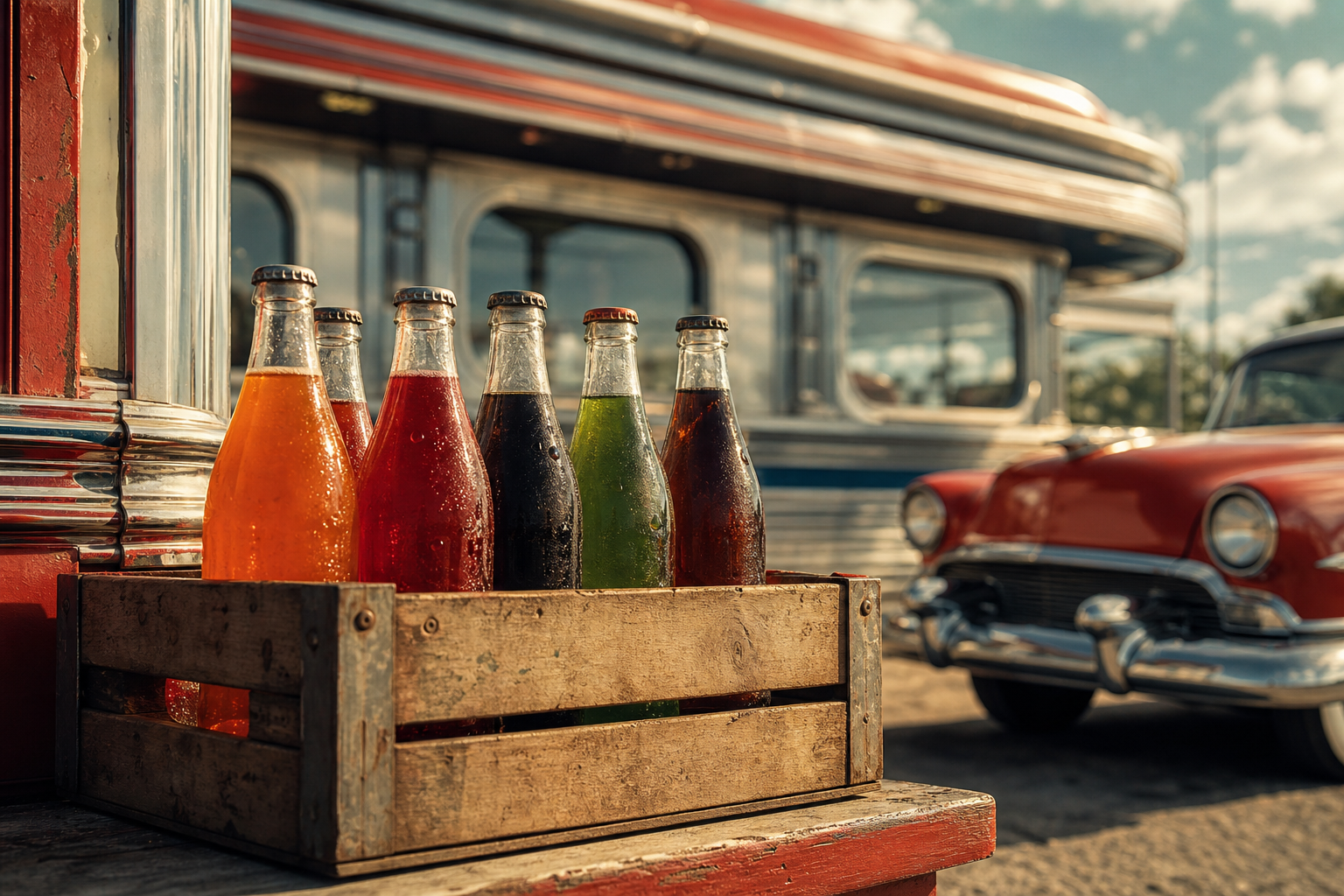
The brand grew through regional bottlers who understood drive-in culture: heavy glass, bold labels, and flavors that photographed well on tray liners. Frostie was never just syrup — it was the prop in a nostalgia performance.
In 1971, Frostie Enterprises acquired Stewart's Restaurants and its competing root beer brand. That purchase expanded distribution and recipe know-how, even though Stewart's restaurants later sold in 1979. The soda side kept evolving.
1974 brought Dog n Suds Root Beer and its drive-in chain into the portfolio — another bet on car-side service and frosty mugs. Collectors still cross-reference Dog n Suds and Frostie memorabilia at bottle shows.
Through acquisitions, Frostie balanced regional loyalty with scale. Maryland and neighboring states treat Frostie as a hometown brand; farther west, it competes as a retro import in specialty aisles.
Flavor expansion followed market demand: fruit sodas for kids, cream sodas for parties, lemonades for summer, ginger drinks for mixers. Sixteen flavors today mirror that decades-long broadening without abandoning root beer.
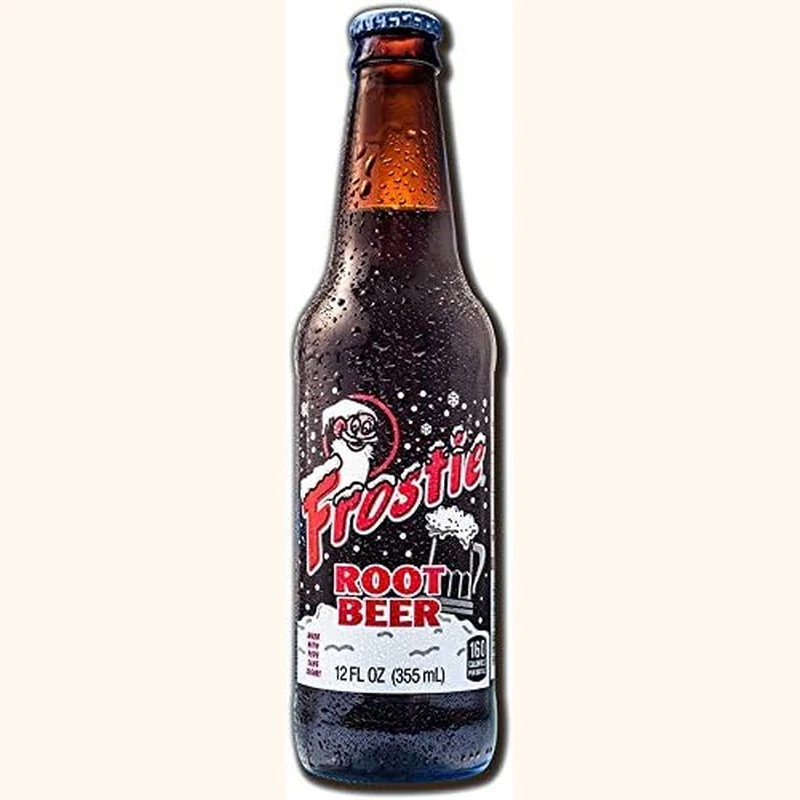
Modern production uses updated sweeteners and PET packaging in some runs, yet label art keeps vintage typography alive. Online communities document label variants — a hobby that preserves corporate memory better than press releases.
Frostie sits in the same cultural lane as Barq's, Mug, and Stewart's — yet Maryland origin gives it a distinct story. When you pour a bottle today, you echo Catonsville bottling lines and chrome-trimmed drive-in stalls.
For tasting context after history, explore all flavors or dive into blue cream and reader memories that reference old mug holders and crate deliveries.
Museum-style collectors frame vintage Frostie ads alongside bottles — typography shifts mark corporate eras better than ingredient tweaks. If you inherit ephemera, store flat out of sunlight to preserve reds and blues.
Drive-in archaeology: surviving mug holders with Frostie embossing appear at estate sales in Maryland and Pennsylvania. They pair with modern bottles in display cabinets for kitchen decor.
Corporate acquisitions in the 1970s explain why some labels reference Stewart's or Dog n Suds — cross-brand history is common in American root beer, not a sign of inauthenticity.
Today's production balances nostalgia with food safety rules — pasteurization and cap liners differ from 1950s crates, yet flavor positioning stays deliberately retro.
Local historians in Catonsville occasionally lead walking tours referencing industrial blocks where early bottling equipment ran — Frostie is part of that civic story.
Merger paperwork from the 1970s explains shared distribution trucks between acquired drive-in brands — logistics mattered as much as recipe secrecy.
Modern rebrands sometimes shrink mascot art while keeping font families — designers study old coasters to stay recognizable to aging loyalists.
Serving and storage
Chill bottles upright for at least two hours before opening — carbonation stays dissolved and foam behaves predictably. Once opened, reseal tightly and refrigerate; fizz drops sharply after 48 hours in fruit and cream styles. Avoid freezing full bottles; expansion can crack glass and mute flavor even if the container survives.
For gatherings, stage a tub of salted ice water instead of loose ice cubes that water down pours. Provide separate openers for twist-cap and pry-off variants. Recycle glass when local rules allow; crates and six-pack dividers make carry-home easier for guests who want to try a second flavor the next day.
Where to explore next
Compare the full Frostie flavor list, read caffeine notes before serving kids at night, and browse community reviews for retailer and bottler tips. Maryland heritage fans should visit our history page for Catonsville roots and drive-in acquisitions.
Alex Morgan has covered American retro sodas for twelve years — bottle hunts, fountain lore, and tasting notes across the Mid-Atlantic.